When a child is diagnosed with autism, the way family members, especially fathers, react determines the rest of the course of the child’s life. Many men struggle to process the news that their child is on the autism spectrum. This stoicism divides families and children, who are left feeling unsupported.
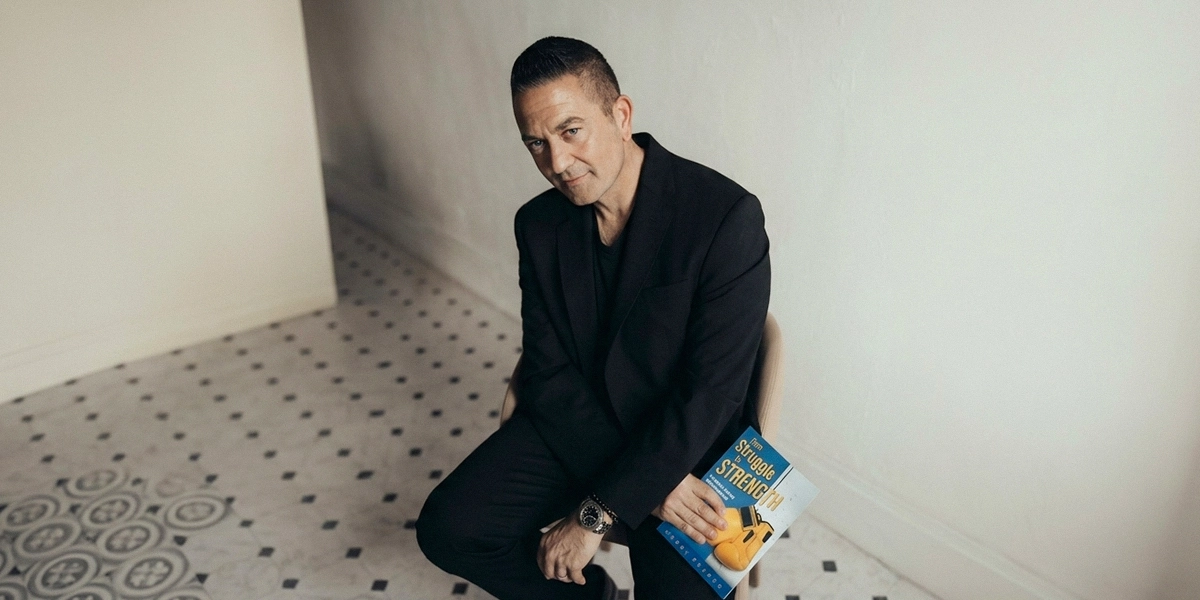
Bestselling author and advocate Harry G. Psaros encourages fathers to step forward and become active partners in their child’s growth. He shares his journey from initial “belligerent” behaviour to acceptance to supporting his son Gus through his book From Struggle to Strength: A Father’s Journey with Autism and the Power of Hope and Positivity.
The book has earned major recognition. It received the 2024 International Impact Book Award in the Life Experiences (Real Life Accounts) category and the Book of the Year for Autism Advocacy from VORAKA Literature. More importantly, it has begun to change the conversation around neurodiversity and fatherhood.
The Challenge of Fathers and Autism Acceptance
Autism diagnosis creates emotional shock for families. It is common for mothers to accept the diagnosis first and seek related help. However, fathers respond in a very different way. Psaros openly discusses this divide.
He explains that many men struggle to accept the diagnosis because it challenges their expectations of fatherhood.
He describes two common responses among fathers. One reaction is denial or ego. Some men refuse to believe their child could be autistic. The other reaction is quiet withdrawal. He explains, “Many of them are in, but they’re stoic because they don’t know what to do. The wife, therefore, hears and sees the stoicism and thinks they’re not on board.”
Psaros addresses this male psyche and outlines the consequences of this stoicism. “All they’re doing is really throwing their child into the abyss, and they’re putting way too much pressure on their wives,” he shares.
He believes families move forward best when both parents fully understand the diagnosis because “when both parents are informed and on board, the child feels that unconditional love.”
The Moment That Changed Everything for Psaros
Psaros did not always approach autism with an open heart. In the early days after Gus began showing signs of autism, he responded with the stoicism he now speaks about openly.
The turning point came during a preschool birthday party. The other children gathered around the cake, but Gus began running around the room and pounding on the windows. Eventually, he became fixated on a fan in the corner. The noise and stimulation overwhelmed him.
Later that day, Gus’s preschool teacher spoke privately with Psaros’s wife, Michelle. She suggested that Gus might be on the autism spectrum. When Michelle returned home, devastated, Psaros was forced to confront what he had been resisting. The experience pushed him to go from denial to determination.
The 2% Rule: Small Daily Progress That Builds Big Results
One idea that Psaros shares with parents is his 2% rule.
The concept is to focus on improving one skill or behavior by a small amount every day. Over time, these small gains accumulate.
Psaros describes the approach this way: He chose one goal for Gus each day. It might be practicing social interaction or building a communication skill. Once that goal improved even slightly, the day counted as progress.
These daily improvements create long-term change.
The Meaning Behind the Gold Boxing Gloves
The cover of Psaros’s book features two gold boxing gloves. The image reflects Psaros’s personal background. He has trained in martial arts for years and holds a third-degree black belt. He explains, “I wanted to bring a Warriors mentality into raising the child. Gold is a representation of hope.”
The gloves also represent discipline. Psaros has revealed that it was slightly controversial to pick the gloves initially, but they resonated very well with the demographic he was trying to reach.
Keynote Speaking and Advocacy
Psaros has expanded his advocacy through public speaking. One major moment came during the 34th Annual Leadership 100 Conference on February 21, 2025, at The Ritz-Carlton in Orlando.
During his keynote, Psaros spoke directly to fathers who feel overwhelmed by the diagnosis.
“Let me emphasize that God doesn’t make mistakes. I remind [fathers] that their child is not a burden or a misfortune, rather a precious gift from God who recognizes the inner strength and resilience within them,” spoke Psaros, combining faith and responsibility.
Conclusion
Harry G. Psaros was once a father unsure of how to respond. Today, he is one of the limited male voices encouraging fathers to engage fully in their child’s development. Through his book, speaking engagements, and advocacy work, Psaros is changing how families approach neurodiversity. He shows that growth begins when families face the challenge together.