
Introduction
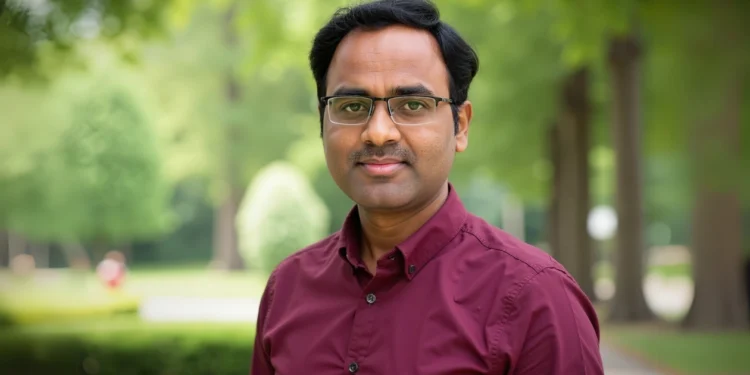
Dr. Sateesh Kumar Rongali is a reputable Senior Software Engineer shaping the future of digital healthcare. He has over nine years of experience across healthcare, banking, and insurance domains. He balances enterprise-scale engineering, applied AI research, and system validation leadership.
Currently serving as a Senior Software Engineer at Cigna Health Care, Dr. Rongali has played a critical role in designing and modernizing complex platforms that support interoperability, scalability, and data-driven decision-making. His expertise spans MuleSoft integrations, Salesforce, and .NET engineering, cloud-native architecture, and automation frameworks that enhance performance while safeguarding quality. Dr. Rongali’s academic contributions explore explainable AI, federated learning, and secure interoperability frameworks that address some of healthcare’s most persistent challenges. This interview explores his journey, technical philosophy, and forward-looking insights into AI-powered enterprise transformation.
Q1. Dr. Sateesh Kumar Rongali, we appreciate you taking the time to speak with us. For years, you have combined technical architecture and applied research in enterprise application development, AI research, and healthcare interoperability. What statements do you think perfectly encapsulate the role of a modern technology leader in today’s data-intensive healthcare landscape?
Dr. Sateesh Kumar Rongali: In today’s data-intensive healthcare environment, technology leaders must possess a deep understanding of both advanced technical systems and the complexities of healthcare delivery. Their role extends beyond building digital solutions; they are responsible for transforming vast volumes of healthcare data into meaningful, actionable insights while ensuring the highest standards of data security and patient privacy.
Modern leaders must strike a careful balance between rapid innovation and strict regulatory compliance, recognizing that every technological decision directly impacts patient safety, data protection, and system interoperability. They also serve as critical bridges between multidisciplinary teams, including engineers, clinicians, compliance specialists, and executive leadership, ensuring that technological initiatives are aligned with clinical objectives and organizational priorities.
Ultimately, the purpose of healthcare technology is to enhance patient care, not to introduce complexity. Effective technology leadership, therefore, requires not only strong technical expertise but also a genuine understanding of healthcare workflows, ethics, and patient-centered outcomes.
Q2. Next, how has navigating the highly regulated yet innovation-driven sectors like healthcare, banking, and insurance given rise to your philosophy on building systems that are compliant and adaptable to rapid technological change?
Dr. Sateesh Kumar Rongali: My experience in highly regulated sectors such as healthcare, banking, and insurance has shaped my philosophy that compliance and innovation must be engineered to function together rather than exist in conflict. I design systems where regulatory, security, and data protection requirements are embedded into the architectural foundation rather than treated as afterthoughts.
By implementing modular and flexible system layers, compliance rules can be updated independently as regulations evolve, without disrupting core operations. Key elements such as audit trails, security controls, and data privacy mechanisms are integrated directly into the development lifecycle to ensure continuous adherence to industry standards.
This approach enables organizations to remain agile and innovative while maintaining strong governance, security, and regulatory compliance, ensuring long-term system sustainability in rapidly changing technological environments.
Q3. Last year, you penned “Federated and Generative AI Models for Secure, Cross-Institutional Healthcare Data Interoperability,” addressing the longstanding tension between data privacy and large-scale analytics. What practical pathways do you see for healthcare institutions to adopt these models without compromising regulatory compliance or clinical trust?
Dr. Sateesh Kumar Rongali: Healthcare institutions can adopt federated and generative AI through a phased, governance-driven strategy that prioritizes regulatory compliance and clinical trust. Initial deployments should focus on targeted use cases such as disease prediction and population health monitoring, where federated learning offers clear value. Strong data governance frameworks must define data ownership, patient consent, and access controls, supported by privacy-preserving techniques like encryption and differential privacy. Explainable AI should be integrated into clinical workflows to ensure transparency and clinician confidence. Beginning with synthetic or de-identified data and gradually transitioning to real patient data under continuous monitoring enables safe, ethical, and scalable implementation.
Q4. Since your work integrates MuleSoft, Salesforce, .NET, Angular, and AWS cohesively, please elucidate the most common pitfalls enterprises face when integrating such diverse technologies from an architectural standpoint. How do you design around them?
Dr. Sateesh Kumar Rongali: Enterprises often face integration challenges when diverse platforms are connected through point-to-point interfaces without a structured architecture, resulting in tightly coupled systems that are difficult to scale and maintain. To mitigate this, I design loosely coupled, standardized integration architectures using canonical data models and event-driven communication. API gateways and middleware layers manage security, traffic, versioning, and service orchestration. Each platform is used for its core strengths: Salesforce for CRM, MuleSoft for integration, AWS for scalable processing, Angular for user interfaces, and .NET for backend services. Centralized governance and reusable integration components further ensure consistency, scalability, and independent team productivity.
Q5. You have led automation initiatives that improved release speed and defect detection. How do intelligent automation and AI-driven testing change the way organizations think about quality assurance in complex enterprise environments?
Dr. Sateesh Kumar Rongali: Intelligent automation transforms quality assurance from a reactive process into a proactive and predictive discipline. Instead of primarily detecting defects after deployment, AI-driven testing identifies potential risks earlier in the development lifecycle. By analyzing historical defect data, system behavior, and user interaction patterns, machine learning models generate comprehensive test scenarios and predict high-risk code changes. This enables teams to focus testing efforts on the most critical areas, reducing execution time while improving defect coverage. Self-healing test scripts automatically adapt to interface and workflow changes, minimizing maintenance. Consequently, quality teams shift from manual execution to strategic quality governance, ensuring faster, more reliable, and scalable enterprise software delivery.
Q6. Lastly, your academic work explores federated learning and secure, cross-institutional data sharing. From a practical enterprise perspective, what challenges must be addressed before federated AI models can be widely adopted in healthcare and insurance systems?
Dr. Sateesh Kumar Rongali: Federated AI faces several barriers to large-scale adoption in healthcare and insurance. Institutions operate on heterogeneous data standards and legacy systems that require major interoperability upgrades. Legal clarity regarding data ownership, accountability, and intellectual property in collaborative environments remains limited. Although federated learning has shown promise in research, secure aggregation and lifecycle management platforms must mature into reliable production solutions. Smaller organizations often lack the computing infrastructure needed to support such models. In addition, successful deployment demands workforce upskilling, governance restructuring, and long-term leadership commitment. Finally, enterprises must demonstrate measurable improvements in patient outcomes, operational efficiency, and cost savings to justify large-scale investment beyond pilot implementations.
Conclusion
Dr. Sateesh Kumar Rongali’s work reflects a thorough understanding of what it takes to build technology that matters in high-stakes environments. His career demonstrates that true innovation emerges from thoughtful architecture, disciplined testing, and an unwavering commitment to transparency and trust. Dr. Rongali sees technology as both an engineering challenge and a human responsibility. His research into explainable and federated AI highlights a future where advanced analytics can coexist with privacy, ethics, and accountability. He proves that progress is most meaningful when it enhances access, accuracy, and decision-making across the entire healthcare continuum.