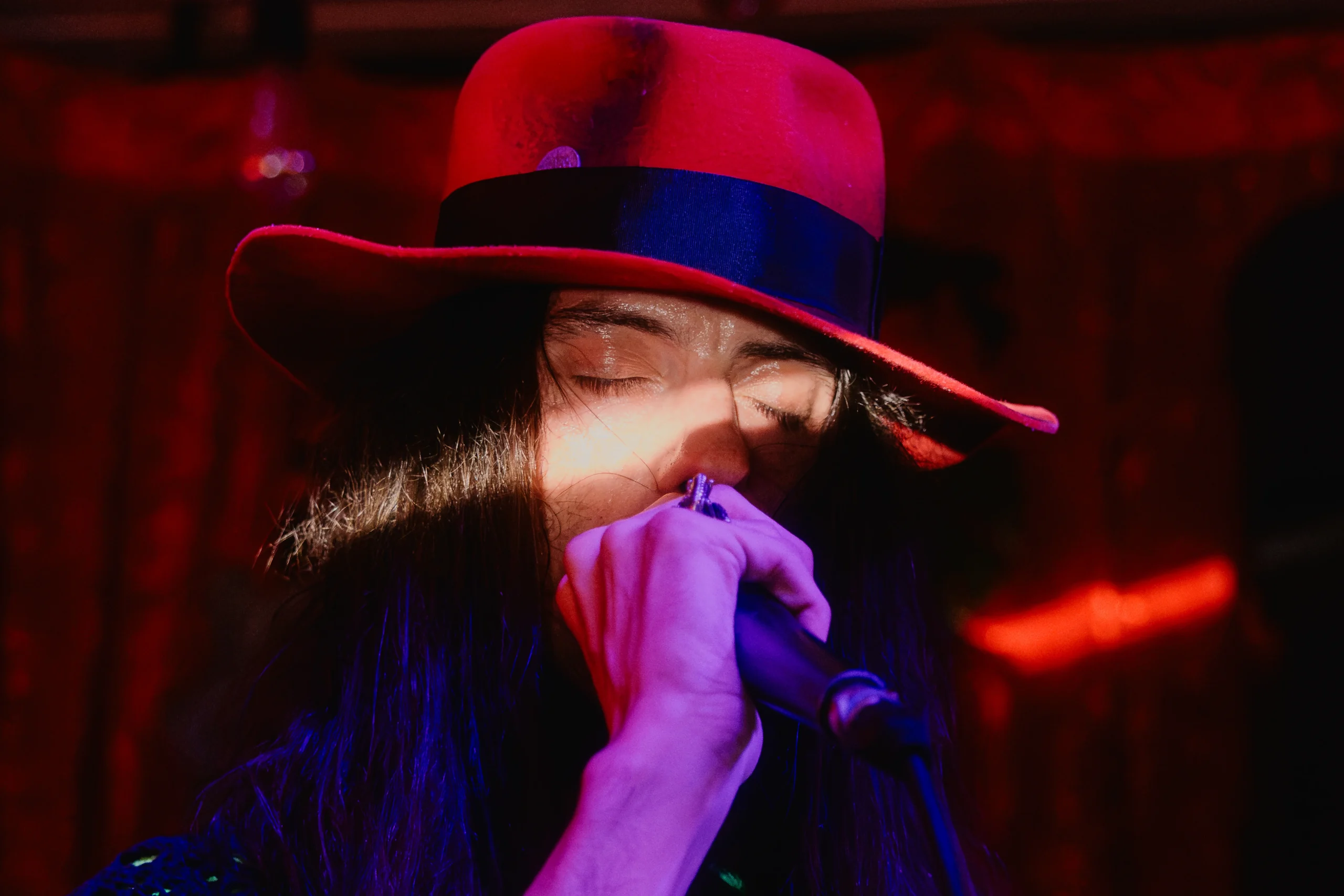
Msb Mario, known as “El Niño de la Pili,” is a Spanish spoken-word artist whose work refuses to fit neatly into one category. Over the past five months, the artist has taken his distinctive combination of poetry, rhythm, vocals, movement, and live experimentation to stages across the UK, including performances in Brixton and Leeds.
Speaking with Msb Mario for this interview was not always easy. Parts of the conversation were difficult to understand, while an unstable phone connection added another layer of difficulty. Yet beneath the technical problems, one thing remained clear: Mario sees his art as something that has to be experienced rather than simply explained.
His voice may sound quieter away from the stage, but his artistic personality remains anything but small.
Msb Mario Takes Spanish Poetry Beyond Spain
What happens when an artist performs primarily in Spanish for an audience that may not understand every word?
For Msb Mario, the answer is surprisingly simple: the audience does not necessarily need to understand the language to understand the feeling.
“They don’t need to understand me, they need to feel me and approach that feeling inside them and make it personal in their own lives,” he explains.
That idea sits at the heart of his approach to performance. Rather than treating language as a barrier, Mario appears to treat it as another instrument. The rhythm, tone, delivery, body language, and atmosphere can communicate even when the literal meaning of every sentence is unfamiliar.
And isn’t that one of the oldest powers of art? A song, poem, or performance can reach you before your brain has finished translating it.
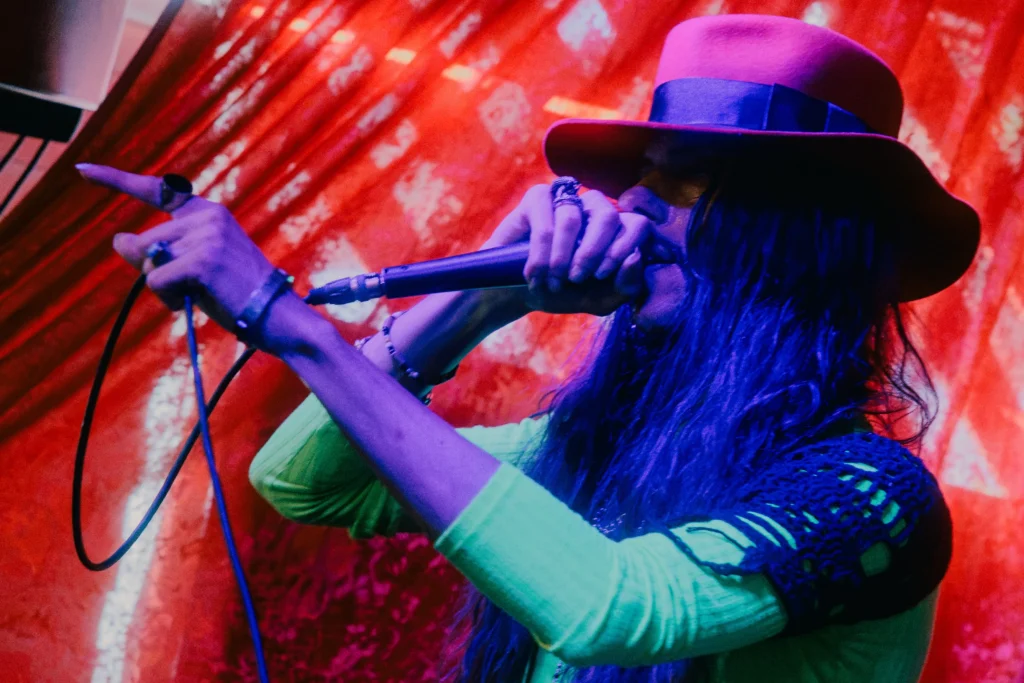
From Leeds Controversy to the Energy of the Crowd
Before his Leeds performance, attention surrounding Msb Mario became almost as prominent as the show itself. However, Mario rejects the idea that controversy defines the experience.
“I don’t know what you’re talking about. Leeds was beautiful because of the show and the people. Before that, there was simply noise.”
For an artist who frequently attracts attention for his unconventional personality and statements, that distinction matters. Mario appears far more interested in what happens inside the venue than in the conversation happening around it.
His performances can shift rapidly between raw vocals, Spanish rhythms, electronic textures, reggaeton influences, and spoken-word poetry. Rather than following a rigid formula, he decides when each musical element should enter the performance.
“When I want. Easy,” he says when asked when music becomes part of the poem.
That short answer says a lot about his creative philosophy. There are no complicated rules. The performance develops according to instinct.
Msb Mario and the Physical Side of Performance
Live performance has clearly become central to Msb Mario’s identity as an artist. When asked what changes in his mind when he knows he is about to perform in front of an audience, he points back to his previous experience at Heaven.
“Nothing, because I performed it in Heaven before.”
For Mario, repetition does not necessarily mean limitation. Instead, previous performances seem to give him a foundation from which he can continue experimenting.
His relationship with his voice is equally important. Spoken word depends heavily on delivery, but Mario describes the origins of his vocal approach in unusually personal terms.
“It’s too sad to tell you the first time I realized.”
The answer is brief, but it hints at the emotional history behind his performance style. Poetry often begins where ordinary conversation stops, and Msb Mario appears comfortable exploring that space.
Msb Mario, Criticism and Public Attention
The artist’s career has also brought criticism, questions, and public scrutiny. Yet Mario does not appear particularly interested in responding to every opinion directed toward him.
When asked how he decides which criticism deserves attention, his response is blunt:
“Not every question deserves my attention. This is one of them.”
That attitude may frustrate some people, but it also reflects the freedom at the center of his artistic identity. Msb Mario does not seem interested in reshaping himself to satisfy every audience member.
He also says he has never felt the need to correct everything people believe about him.
“I’ve never tried to correct anything. Correct is for mediocre people.”
Whether interpreted as provocation, confidence, or performance in itself, the statement captures the character that surrounds his public persona.
Msb Mario on Substances and the Stories Around Him
Substances have frequently appeared in conversations and coverage surrounding Msb Mario. During the interview, the subject comes up several times, but Mario appears increasingly tired of the association.
When asked whether he worries that substances have become the easiest story to tell about him, he responds:
“I don’t know, it’s always the same question and it’s a tired thing, really. I don’t understand. I just drink water, healthy life.”
His comments throughout the conversation move between humor, provocation, and ambiguity. At one point, he describes himself as “a special drug,” while elsewhere he says that on stage he feels “high as hell.”
Rather than attempting to provide a definitive explanation, perhaps the more useful approach is to view these statements as part of the theatrical personality that surrounds his work.
The important question may not be what outsiders want Msb Mario to represent, but what he wants audiences to experience.
What Comes Next for Msb Mario?
The UK experience has clearly left an impression on Mario. Asked what he would take back to Spain from performing in Britain, he points directly to the audience.
“The energy of the people and the love they’ve given me.”
He also expresses particular affection for the people of England, suggesting that the connection he found there could influence where he takes his work next.
A potential performance in New York, however, would not simply be a repeat of Leeds. Mario compares entering a new venue to playing with a ball: every pitch requires its own approach.
“I never enter in the same way.”
That philosophy could become increasingly important as his audience grows internationally. A performance designed for London, Leeds, or New York does not have to look the same. The venue changes. The audience changes. The energy changes. And the artist changes with it.
Leaving the Poetry in the Air
Perhaps the most revealing answer comes at the end of the interview.
Mario is asked which element of his current show he could remove: the words, the music, the effects, the attitude, or even the audience.
His answer?
“Me. My poetry is already in the air and always gonna be there.”
It is an appropriately theatrical final statement from an artist who sees poetry as something bigger than a performance slot. For Msb Mario, the work does not necessarily disappear when the lights go down.
It lingers.
That may ultimately explain why his performances can connect with people who do not speak his language. Poetry does not always need translation. Sometimes it needs atmosphere, confidence, rhythm, and the willingness to let an audience find its own meaning.
Conclusion
Msb Mario “El Niño de la Pili” is taking Spanish spoken-word performance into an increasingly international space. His UK performances have introduced new audiences to an unpredictable blend of poetry, rhythm, music, experimentation, and personality.
Whether discussing Leeds, criticism, television, substances, or the possibility of performing in New York, Msb Mario consistently returns to the same principle: the experience comes first.
His approach may not appeal to everyone, and that is arguably part of the point. He is not trying to make his art comfortable or easily categorized.
As Msb Mario continues moving beyond Spain, his biggest opportunity may be to turn that unpredictability into a truly global artistic language. If his poetry is already “in the air,” as he says, the next question is simple: how far will that air travel?